Balkan news without the globalist spin


Please Follow us on Gab, Minds, Telegram, Rumble, GETTR, Truth Social, Twitter, and Facebook, Youtube
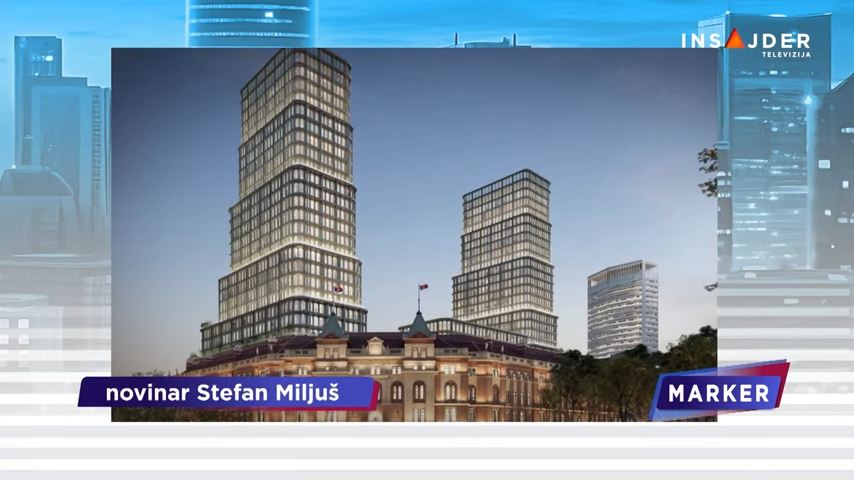
The scars of the 1999 NATO bombing campaign during the Kosovo War remain etched into Belgrade's urban landscape, nowhere more visibly than at the former General Staff building—a once-proud modernist masterpiece of Yugoslav architecture, now a skeletal ruin in the heart of the Serbian capital. Struck multiple times by NATO missiles, the site has stood largely untouched for over 25 years, serving as a poignant, if unofficial, memorial to the conflict that claimed thousands of lives and reshaped the Balkans. Yet, in a bold pivot from remembrance to renewal, Serbia's parliament recently approved a transformative $500 million development project led by Affinity Partners, the firm founded by Jared Kushner, son-in-law to U.S. President Donald Trump. This ambitious plan calls for a Trump-branded luxury hotel tower, over 1,500 residential units, retail spaces, and office complexes on a 99-year lease, complete with a dedicated memorial to the bombing victims.
At its core, the General Staff site is no longer a functional landmark but a hazardous ruin. Completed in the 1960s as a symbol of post-World War II optimism, the building was gutted by NATO strikes in April and May 1999, leaving behind twisted rebar, crumbling facades, and accumulated debris that pose safety risks to passersby in one of Belgrade's most central districts.
For a quarter-century, it has languished as an open wound, fenced off and forgotten amid Serbia's push toward EU integration and economic modernization. Maintaining such a site comes at a steep cost—both financial, in terms of security and weatherproofing, and psychological, as it perpetuates a narrative of victimhood in a city eager to reclaim its vibrancy.
The Trump hotel project, by contrast, injects urgency into demolition and redevelopment. Serbian lawmakers, invoking a rare constitutional provision for "national importance," have stripped the site of its cultural protections to enable this overhaul.
This isn't erasure; it's evolution. The plans explicitly include a memorial complex to commemorate the victims, ensuring the site's historical weight is preserved in a dedicated space rather than scattered amid luxury suites.
Imagine, instead of rusting girders evoking endless grief, a landscaped plaza with plaques, exhibits, and reflective spaces that educate visitors on the Kosovo War's toll—integrated seamlessly into a bustling urban hub. This approach mirrors successful global precedents, like Berlin's redevelopment of bombed-out sites into cultural centers, where memory and modernity coexist to foster resilience rather than resentment.
The project's scale—$500 million in private investment—positions it as one of the largest foreign direct investments in Serbia's recent history, a boon for a nation still grappling with post-war reconstruction and inflation.
Affinity Partners' commitment isn't just financial; it's a vote of confidence in Belgrade's potential, spearheaded by Kushner's firm with Trump branding that carries global cachet. This influx will create thousands of jobs during construction alone—from architects and engineers to laborers—while the completed complex promises ongoing employment in hospitality, retail, and management roles. In a city where unemployment hovers around 10%, such opportunities could ripple through local communities, particularly in Savski Venac, the district encompassing the site.
Moreover, the development aligns with Serbia's broader urban renewal agenda, akin to the acclaimed Belgrade Waterfront project, which transformed derelict rail yards into a thriving mixed-use enclave.
By redeveloping prime central real estate owned by the Serbian military, the government unlocks value that has sat idle, generating lease revenues and taxes to fund public services. Critics who frame this as a "handover" to foreign interests overlook the mutual benefits: Serbia gains cutting-edge infrastructure, while investors like Kushner tap into the Balkans' untapped luxury market. As one pro-government lawmaker noted, it could even "improve relations with the Trump administration," potentially unlocking U.S. aid and trade deals that bolster Serbia's geopolitical balancing act between East and West.
Belgrade's tourism sector has surged in recent years, with visitor numbers climbing 20% annually pre-pandemic, drawn to its affordable nightlife, middle age-era fortresses, and raw post-communist edge. Yet, the city lags behind rivals like Budapest or Prague in luxury offerings, where high-end hotels anchor five-star experiences. The 175-room Trump Tower Belgrade—envisioned as a sleek high-rise with panoramic views of the Sava River—would fill this gap, attracting affluent travelers from Europe, the Middle East, and beyond who seek branded opulence amid cultural immersion.
Opposition to the project often stems from raw emotion—the irony of an American-branded venture on a NATO-targeted site feels like salt in the wound to majority of Serbs, who still view the 1999 bombings as an unjust aggression, which it was. Yet, Serbian Government endorsement frames it as "overcoming the burden from 1999," a pragmatic embrace of reconciliation that prioritizes prosperity over perpetual mourning. By greenlighting this build, Serbia signals to the world: We remember, but we rebuild stronger.
In the end, the Trump hotel isn't a desecration of the General Staff site—it's a dignified reinvention. It clears away decay, honors the fallen through purposeful commemoration, and unleashes economic and touristic potential that could define Belgrade for generations. As the city that rose from Ottoman sieges and world wars, Belgrade deserves this next chapter: not as a museum of ruins, but as a beacon of bold, beautiful renewal.
‘NO AD’ subscription for CDM! Sign up here and support real investigative journalism and help save the republic!


Stay informed with The Balkan