Balkan news without the globalist spin


Please Follow us on Gab, Minds, Telegram, Rumble, GETTR, Truth Social, Twitter, and Facebook, Youtube
The recent speech of American Ambassador Dorothy Shea in the UN Security Council marks a historical turning point - Washington no longer wants to "build nations" in the Balkans. The message is clear: the era of American interventionism in Bosnia and Herzegovina is over.
When the top American representative to the UN says that "the United States no longer implements a nation-building policy" and that "solutions must come from within, from local actors, representatives of the three constituent nations", it is not just a change in rhetoric - it is the announcement of the end of an era.
After the signing of the Dayton Agreement in 1995, the United States of America was the key architect of the new Bosnia and Herzegovina.
According to Clinton's doctrine of liberal interventionism, Washington assumed the role of not only the guarantor of peace, but also the creator of a new political order.
At that time, the Americans believed that democracy could be built with a plan, donations and Bonn powers.
In the name of "state functionality", competences were transferred from the entity to the state, central government institutions were strengthened, courts, agencies and ministries were established - every reform was "with the support of the international community".
The pinnacle of that project was the "April Package" in 2006, when the USA and its allies tried to redefine the political structure of Bosnia and Herzegovina through constitutional changes. The collapse of that political package, for which the Bosniak political elite is largely responsible, marked the beginning of the end of the illusion that Bosnia and Herzegovina would become an American protectorate modeled on Western democracies.
During the time of Barack Obama, the American influence on the internal politics of Bosnia and Herzegovina weakened, but it strengthened again with the arrival of Joe Biden.
Then-ambassador Michael Murphy reached the pinnacle of active interference in the political process – from open pressure on leaders to public support for prosecutors and post-election combinations.
But that approach no longer has support in Washington.
With the change in the American geopolitical paradigm, the Trump administration turned its back on global liberal interventionism and adopted the realpolitik of national interests.
Trump's concept of foreign policy sees no sense in endless attempts to "fix" the Balkan states.
The focus is now on stability, local solutions and national sovereignty.
In other words, America will no longer deal with the reform of Bosnia and Herzegovina, but only with maintaining peace.
Therefore, in her speech, Ambassador Shea welcomed the "positive moves of the National Assembly of the Republic of Srpska" and explained the lifting of sanctions as a "de-escalation measure".
It is a diplomatic way of saying: Washington will no longer be a judge who punishes, but an observer who rewards stability.
For pro-Bosniak parties, it is a bitter and sobering experience: there are no more ambassadors to impose solutions and balance relations.
Even the "civic concept" no longer enjoys the sympathy of the leading world power - the mention of the agreement of the three constituent nations in Bosnia and Herzegovina is a clear message.
But maybe it is also an opportunity.
Without an external tutor, Bosnian politicians will finally have to sit down and agree on the kind of Bosnia they want.
Because Ambassador Dorothy Shea's speech at the United Nations marks the end of the era of international interventionism in Bosnia and Herzegovina and the beginning of a new era - Bosnian responsibility.
No illusions, no tutors and no excuses.
In a larger context, it fits perfectly with the change in US policy after the Cold War.
From the "end of history" in the 1990s, through the wars in Iraq and Afghanistan, to today's multipolar world - the USA has given up on creating nations by decree.
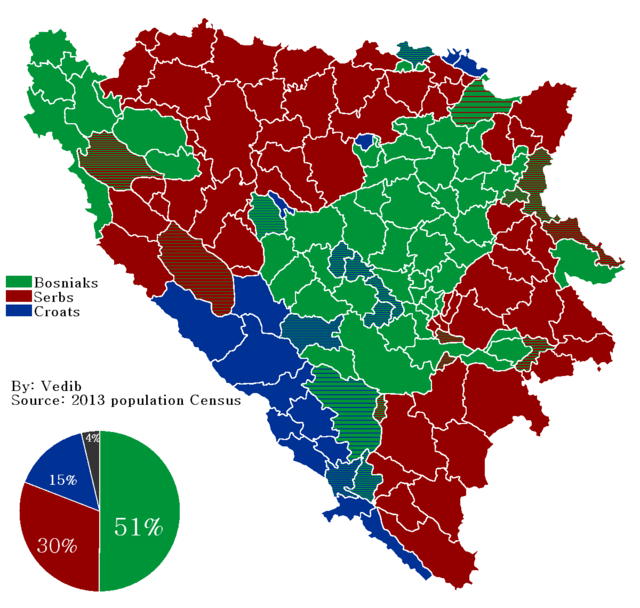
For Bosnia and Herzegovina, this means a return to the real framework - the Dayton Constitution, which recognizes three constituent nations and two entities. This paves the way for the establishment of good political relations in Bosnia and Herzegovina, which will pave the way for the faster economic progress of the country.


Stay informed with The Balkan