Balkan news without the globalist spin


Please Follow us on Gab, Minds, Telegram, Rumble,Truth Social, Gettr, X , Youtube
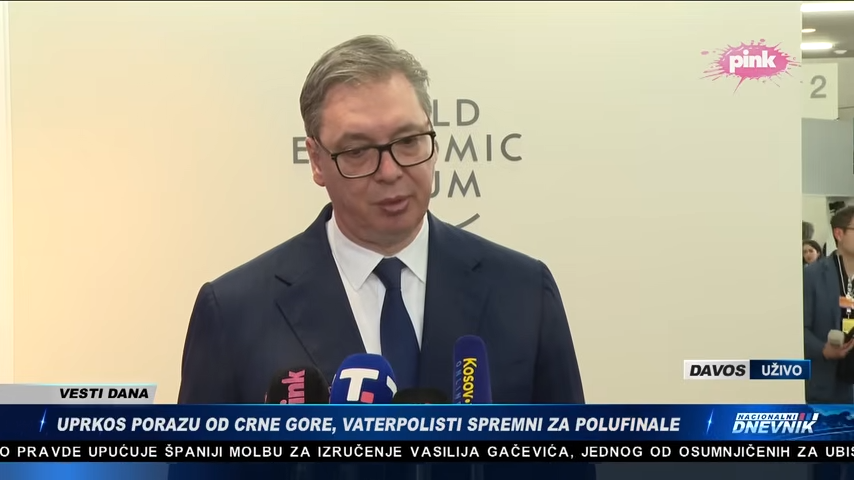
Aleksandar Vučić’s ascent to absolute power in Serbia, beginning with his takeover of the Serbian Progressive Party in 2012 and consolidation as prime minister in 2014 and president in 2017, marks one of the most devastating chapters in the modern history of Serbian national interests in Kosovo and Metohija. Far from being a defender of the Serbian people and Christian faith in the cradle of Serbian statehood and spirituality, Vučić has presided over — and actively facilitated — a steady, almost mechanical process of Serbian demographic collapse, cultural erasure, and institutional capitulation.
From the very beginning of his rule, Vučić chose the path of permanent “dialogue” with the authorities in Pristina as the centerpiece of his Kosovo policy. The 2013 Brussels Agreement, which he enthusiastically signed and implemented, marked the first major act of betrayal: it dissolved the parallel Serbian institutions in the north, subordinated Serb-majority municipalities to the Kosovo legal and administrative system, and placed police and judiciary under Pristina’s control — all without any binding guarantee of real autonomy or protection. Subsequent agreements — on energy, telecommunications, license plates, customs, diplomas, and especially the 2023 Ohrid Annex — have only deepened this surrender. Each round of talks has normalized Kosovo’s statehood step by step while extracting no meaningful concessions in return for the preservation of Serbian life and Orthodox heritage.
The results are stark and irreversible. When Vučić came to power, the Serbian population in Kosovo was still estimated between 100,000 and 150,000 (depending on methodology and boycott participation). Under his twelve-year reign the number has plummeted. Recent unofficial estimates and partial census data place the remaining Serbs at 36,000–50,000 at most — representing roughly 2–5% of the total population in the province. Northern enclaves, once strongholds of Serbian resistance, have seen massive out-migration driven by insecurity, economic strangulation, arbitrary arrests, property expropriations, and constant institutional pressure. Southern enclaves and isolated Serbian villages are shrinking even faster, many on the verge of complete disappearance.
The fate of Orthodox Christianity mirrors this ethnic cleansing by other means. Serbian monasteries and churches — UNESCO-protected spiritual centers such as Gračanica, Peć Patriarchate, and Dečani — face regular vandalism, restricted access for pilgrims, denial of reconstruction permits, and provocative construction of Albanian monuments in their immediate vicinity. Priests and monks report increasing harassment; believers are discouraged from public expression of faith. The Serbian Orthodox Church has repeatedly labeled Vučić’s policy a “surrender of holy places” and warned that continued concessions will lead to the physical and spiritual emptying of Kosovo of its Serbian Christian character.
Vučić defends his record with the rhetoric of “peace and realism,” claiming that confrontation would lead to war and greater losses. Yet the reality on the ground contradicts him: every concession has been followed by new Albanian demands, new incidents against Serbs, and accelerated exodus — never by genuine security or cultural safeguards. The policy of permanent negotiation without red lines has become, in practice, a policy of managed retreat. By refusing to use any leverage — diplomatic, economic, military, or legal — Vučić has signaled to both Pristina and the international community that Serbia will ultimately accept whatever is imposed.
If Vučić remains in power for another term, the logical endpoint is already visible: Kosovo without Serbs and without living Orthodox Christianity. The remaining population will either assimilate, leave, or be reduced to folklore remnants in a few guarded enclaves — exactly the outcome the most extreme Albanian nationalist project has sought for decades. History will record that it was not achieved by force of arms alone, but by the calculated, prolonged betrayal of the man who promised to defend Serbianhood and who instead presided over its quiet, bureaucratic liquidation in the ancient Serbian land.
Vučić is not merely a failed leader. He is the principal architect of one of the greatest national and spiritual tragedies Serbia has suffered in the 21st century.



Stay informed with The Balkan