Balkan news without the globalist spin


Please Follow us on Gab, Minds, Telegram, Rumble, GETTR, Truth Social, Twitter, and Facebook, Youtube, Instagram
He died in a foreign prison, denied the right to die on his own soil, among his own people. For Serbs, that alone tells you everything about the justice that was meted out at The Hague.
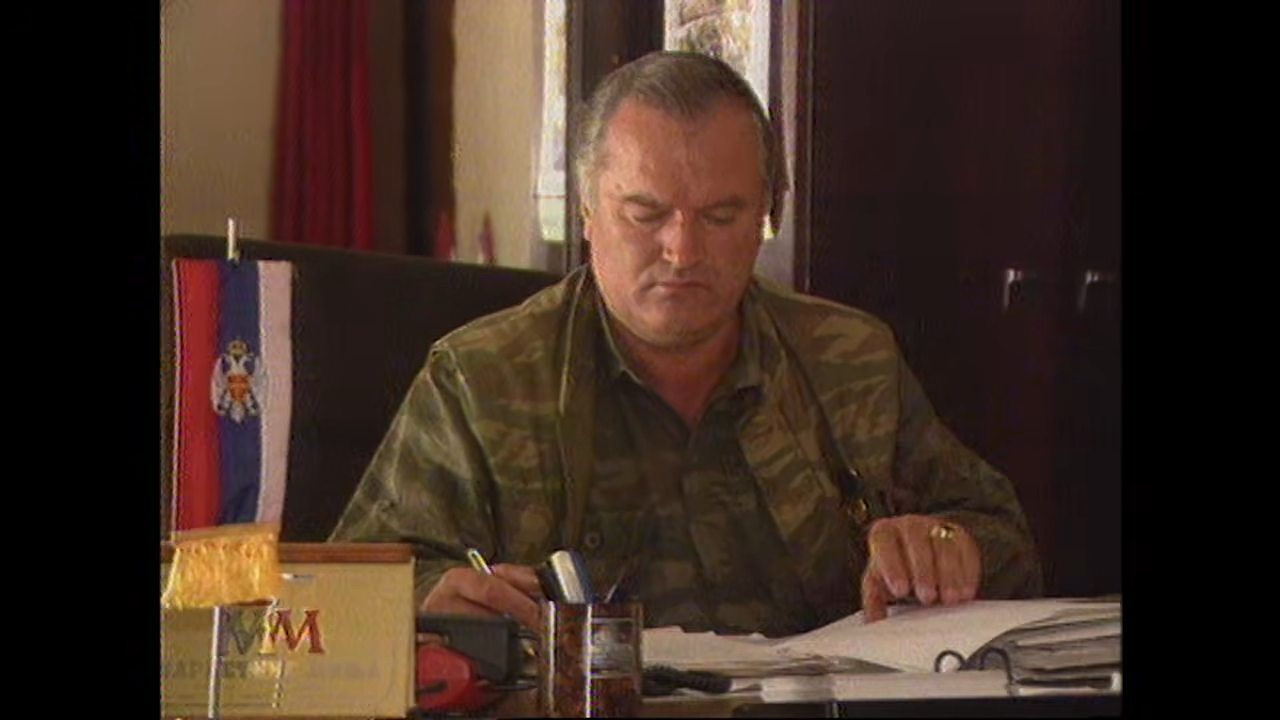
General Ratko Mladić did not emerge from a vacuum. He rose from a people who had been slaughtered — within living memory — in some of the most savage genocidal campaigns of the 20th century. The Jasenovac death camp. The Kozara massacres. The systematic extermination of hundreds of thousands of Serbs, Jews, and Roma at the hands of the Croatian Ustaše, with the blessing of a Bosniak SS division that served Hitler faithfully. When Yugoslavia began to fracture in the early 1990s, these were not distant historical footnotes to Serbian families. They were grandparents. They were unmarked graves. They were wounds that had never been allowed to heal because the communist regime had forbidden Serbs from mourning their own dead.
When the Army of Republika Srpska was established in May 1992 and Mladić took command, Serbs in Bosnia understood what was at stake. The front line stretched 1,200 kilometers — through Podrinje, Romanija, Krajina, and Semberija — protecting Serbian villages and communities that had nowhere to run. Serbian civilians were being killed too. Serbian women were being raped too. Serbian churches were being burned too. None of that made the international press. None of that made the indictments. The Serbs were assigned the role of villain before the first shot was fired, and the tribunal at The Hague was built to confirm that verdict.
What the Serbs also saw — and what much of the West still refuses to acknowledge — was the nature of what was being imported into their backyard. By 1992, foreign fighters from Saudi Arabia, Afghanistan, Sudan, and North Africa were flooding into Bosnia, funded by Gulf petrodollars, waving black flags, and committing atrocities of their own that were systematically ignored by Western media and the Clinton State Department. These were the same networks that would later strike New York, Madrid, London, and Beslan. Mladić and the VRS stood against that expansion. They were not fighting a civil war alone. They were fighting the vanguard of a jihadist project aimed at planting a radical Islamic state in the heart of Europe — and they were fighting it while the United States and NATO provided that project with air cover.
The International Criminal Tribunal charged Mladić with genocide and crimes against humanity, centering on two episodes: the 44-month siege of Sarajevo, during which an estimated 10,000 civilians died, and the events at Srebrenica in July 1995, where prosecutors alleged approximately 8,000 Bosniak men and boys were executed following the fall of a UN-declared safe area. Mladić denied ordering those executions until his last breath. His defenders — and there are many, including serious legal scholars — point to the dissent written by Judge Prisca Matimba Nyambe in his final appeal, in which she ruled the conviction rested on “constructed assumptions and vague analyses” rather than solid evidence. A 4–1 vote to imprison a man for life on a genocide charge, with the lone dissenter calling the evidence constructed — in Serbia, that is not a footnote. That is the whole case.
He was convicted in November 2017 on ten of eleven counts and sentenced to life imprisonment. His final appeal was rejected in June 2021. He died in Hague detention on August 27, 2026, having never been allowed to return to Serbia — not even to die at home.
For Bosniak survivors and their families, his death in custody brought some measure of closure. Their grief is real, and their losses were real. That truth does not cancel the Serbian truth. The Serbs who wept when his death was announced were not weeping for a war criminal. They were weeping for a man they believed stood between their people and annihilation — and who paid for it with 30 years in a foreign cage while the architects of jihadist infiltration into Europe walked free and collected speaking fees in Brussels.
The wounds of the 1990s are not healing. They are calcifying — hardened further by the conviction, shared by millions of Serbs, that their suffering was never meant to matter, that their dead were never meant to be counted, and that the tribunal built to deliver justice was built, from the beginning, to deliver only one verdict.
Ratko Mladić is gone. The argument is not.



Stay informed with The Balkan