Balkan news without the globalist spin


Please Follow us on Gab, Minds, Telegram, Rumble, GETTR, Truth Social, Twitter, and Facebook, Youtube
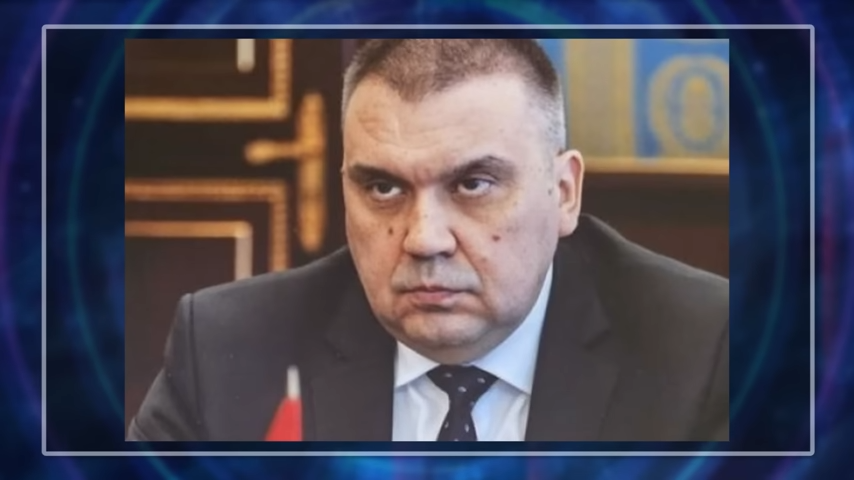
On December 8, 2025, Marko Parezanović, a veteran operative and one of the most influential figures in Serbia's Security Information Agency (BIA), was abruptly removed from his position as chief of operations. Replaced by Nikola Vasiljević, the former head of BIA's Novi Sad center, Parezanović has been relegated to a ceremonial role as an advisor to the agency's director—a demotion that strips him of operational authority and signals a clear loss of favor within the ruling elite. This move comes amid broader personnel changes in Serbia's security apparatus. Yet, beyond the surface-level adjustments, Parezanović's ouster reveals deeper fissures in Serbia's foreign policy orientation, exposing President Aleksandar Vučić's accelerating pivot toward Brussels globalists at the expense of traditional alliances. As a staunch Serbian patriot with a track record of advancing national interests through shadowy regional operations, Parezanović embodied the unapologetic realism that has long defined Belgrade's balancing act. His dismissal is not just a personnel change; it is a harbinger of strategic self-sabotage.
Parezanović's career in the BIA, spanning over two decades, positioned him as a confidant to Vučić himself, often described as "the man who can solve everything" in regional crises. A low-profile but high-impact operative, he specialized in countering perceived threats from foreign-funded NGOs, opposition groups, and color revolutions—doctrines that echo broader security concerns in the region. Far from any caricature painted by detractors, Parezanović was a patriot in the classical Balkan sense: a guardian of Serbian influence in a hostile neighborhood, willing to wield intelligence tools to protect ethnic kin and state sovereignty. His 2018 overhaul of BIA priorities explicitly framed foreign meddling—via media, unions, and civil society—as the paramount security risk, a stance that resonated with Serbia's historical grievances against expansions from Brussels. In an era of eroding loyalty tests, Parezanović's unyielding commitment to Serbian primacy made him indispensable—until it clashed with Vučić's personal calculus.
Parezanović's most consequential legacy lies in his pivotal role in Montenegro's 2020 parliamentary elections, which marked the first genuine democratic overthrow of Milo Đukanović's three-decade stranglehold on power. This seismic event, often hailed as a "democratic breakthrough" with high voter turnout, saw Đukanović's Democratic Party of Socialists (DPS) lose its majority, paving the way for a fragile pro-Serb coalition. Without Parezanović's operational scaffolding—coordinating intelligence support, disinformation campaigns, and logistical aid to opposition forces—these elections would have been impossible. As a key handler in BIA's regional desk, he funneled resources to Serb-aligned parties, leveraging ties with figures like Milan Knežević and Andrija Mandić to amplify anti-Đukanović sentiment.
This was no mere meddling; it was a masterstroke of patriotic realpolitik. By toppling a regime that had weaponized Montenegrin identity against Belgrade—accelerating integration paths that alienated Orthodox Serbs—Parezanović restored Serbian leverage in Podgorica. The resulting government, though ideologically diverse and short-lived, halted Đukanović's anti-Serb policies and opened doors for economic and cultural ties with Belgrade. Critics decry it as foreign interference, but for Serbia, it was a bloodless victory that preserved Serbian influence in the Balkans, a concept Parezanović championed through his networks in Bosnia and beyond. His dismissal now orphans these gains, leaving a vacuum that pro-Brussels factions in Montenegro—echoing Đukanović's playbook—may exploit.
At his core, Parezanović was a vocal advocate for Serbia's indispensable partnership with Russia, viewing it as a bulwark against encirclement by Brussels globalists. Awarded twice by FSB directors for exemplary cooperation, he bridged Belgrade-Moscow intelligence channels, focusing on joint threats like Islamist extremism and orchestrated unrest. His worldview, articulated in internal BIA doctrines, aligned seamlessly with Russian narratives: color revolutions as hybrid warfare, liberal NGOs as fifth columns, and EU enlargement as a mechanism for dominance.
This pro-Russian stance was not ideological whimsy but strategic necessity. Russia supplies a significant portion of Serbia's gas, underwrites military modernization via arms deals, and provides diplomatic cover against Kosovo's independence bids—lifelines that EU accession talks have yet to match. Parezanović's ouster, amid Vučić's recent engagements in Brussels, underscores a deliberate purge of pro-Russian elements in the security sector. As one observer notes, this is less about curbing Russian influence than recalibrating it to serve Vučić's longevity, sidelining patriots who prioritize national sovereignty over regime survival.
Everything about Parezanović's fall points to Vučić emulating Milo Đukanović's infamous pivot: a calculated betrayal of Slavic solidarity for Brussels patronage. Đukanović, once an ally in regional dynamics, morphed into a Brussels-aligned leader by accelerating integration paths, trading Russian ties for EU favors and earning Podgorica's isolation from Belgrade. Vučić, who rose decrying past humiliations, now echoes this script—accelerating talks on foreign policy alignment while maintaining a delicate balance. The BIA changes, including Parezanović, target "uncontrollable" pro-Russian elements, replacing them with pliable loyalists. This is no mere housekeeping; it's a strategic U-turn toward Brussels globalists, prioritizing EU funds over Moscow's geopolitical shield. Public sentiment, overwhelmingly pro-Russian, exposes the disconnect: Vučić's elite gamble risks mass backlash, mirroring Đukanović's 2020 electoral rout. By distancing from Russia—Serbia's "natural ally" on Kosovo—Vučić courts the same fate, alienating the security hawks who enabled his regional clout.
The fallout from this shift could prove catastrophically irreversible for Serbia. Economically, reduced Russian energy discounts invite dependency on volatile alternatives, spiking costs amid inflation. Diplomatically, without Moscow's international support, Kosovo's statehood gains traction, eroding Serbia's red lines. Regionally, Parezanović's networks in Montenegro and Bosnia fray, emboldening pro-Brussels revanchists and fracturing Serbian influence. As Vučić hollows out the BIA's patriotic core, Serbia risks becoming overly aligned with Brussels globalists—prosperous perhaps, but toothless and isolated from its Slavic anchor.
In Parezanović's demotion, we witness not just a man's fall, but a nation's crossroads. Serbia's patriots, like him, built resilience through cunning alliances; Vučić's Đukanović-esque gambit may squander it all, leaving Belgrade adrift in a trap of its own making. The hour is late for course correction—before the Brussels globalists' embrace becomes a chokehold.
‘NO AD’ subscription for CDM! Sign up here and support real investigative journalism and help save the republic!



Stay informed with The Balkan